In Which Layer Is the Magnetic Field Generated? Unveiling Earth's Invisible Shield
Imagine an invisible, colossal shield surrounding our planet, constantly deflecting harmful radiation and solar winds, silently making life on Earth possible. This is Earth's magnetic field, an essential force we often take for granted. But have you ever wondered where this incredible phenomenon originates, deep within our world? The answer lies far beneath our feet, in a truly dynamic and volatile region.
This super pillar hub will guide you through the astonishing science behind Earth's magnetic field. We'll explore its birthplace, the intricate processes that generate it, and its profound impact on our planet and even our technology. Prepare for a journey to the very heart of Earth, where molten metals churn and magnetic forces are forged.
The Heart of the Matter: Earth's Dynamic Core
Our planet isn't a solid ball; it's composed of several distinct layers, each with unique properties. From the thin crust we walk on to the intensely hot inner core, Earth's internal structure is a complex marvel. Understanding these layers is key to pinpointing the origin of our magnetic field. If you're curious to dive deeper into our planet's hidden depths, explore our guide on a Journey to Earths core.
The crucial layer responsible for generating the magnetic field is the outer core. Located approximately 2,900 kilometers (about 1,800 miles) beneath the surface, this region is a vast ocean of molten iron and nickel. Despite its extreme temperature, it remains liquid due to immense pressure, constantly swirling and flowing like a turbulent river. To truly grasp the environment where this field is born, you'll want to Explore the outer cores makeup, understanding its unique composition and the extreme conditions that define it.
The Geodynamo: Earth's Self-Sustaining Engine
The generation of Earth's magnetic field isn't static; it's a dynamic, self-sustaining process known as the geodynamo. This remarkable planetary engine converts kinetic energy—the energy of motion—into magnetic energy. It's a continuous, complex interaction of heat, motion, and electrically conductive material within the outer core.
The geodynamo operates thanks to several key ingredients. The molten iron and nickel in the outer core are excellent electrical conductors. Convection currents, driven by heat rising from the hotter inner core and cooling near the outer core's boundary, cause this liquid metal to move. As Earth rotates, the Coriolis effect—the same force that influences weather patterns—twists these massive convection currents. This twisting motion causes the electrically conductive molten iron to spiral, generating powerful electric currents. These electric currents, in turn, create the magnetic field, which then influences the movement of the conductive fluid, completing a feedback loop that amplifies and maintains the field over billions of years. To fully grasp this intricate mechanism, we recommend you Explore the Geodynamo Theory.
The interplay of these fundamental forces is mesmerizing. Without the continuous motion from convection and the twisting influence of the Coriolis effect, the geodynamo would grind to a halt. The electric currents wouldn't form, and our planet would lose its protective magnetic shield. For a more detailed breakdown of these critical drivers, learn more about The Role of Convection and the Coriolis forces in magnetic field generation.
More Than Just a Compass: The Magnetic Field's Reach and Importance
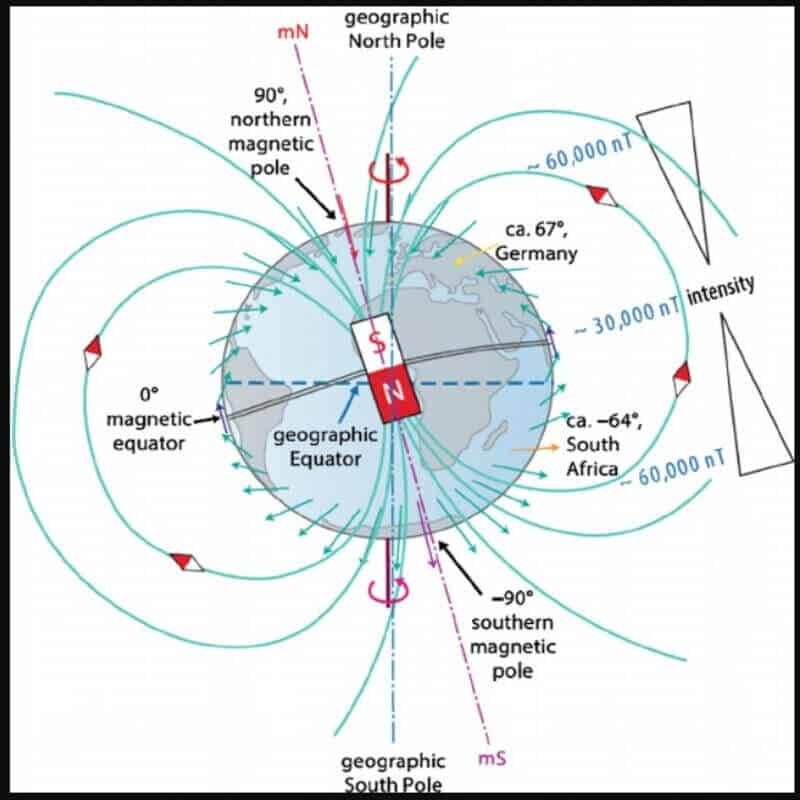
The result of the geodynamo is a complex, dynamic magnetic field that resembles a distorted dipole, strongest near the poles and weakest at the equator. This field extends thousands of kilometers into space, creating a protective bubble known as the magnetosphere. Its primary function is to deflect the solar wind—a constant stream of charged particles emitted by the Sun—and harmful cosmic radiation.
Without the magnetosphere, Earth's atmosphere would likely be stripped away, and its oceans would evaporate, rendering our planet uninhabitable. This invisible shield is a cornerstone of our existence, making Earth the thriving, vibrant world it is. It's also what guides our compasses, with the "north-seeking" end aligning with the magnetic field lines. The characteristics of this field and its immense significance are further explored in our dedicated guide on Characteristics and Significance of Earths.
A Living, Breathing Field: Reversals, Storms, and Modern Vulnerabilities
Earth's magnetic field isn't static; it's a dynamic entity that constantly changes. Its strength varies, its magnetic poles wander, and historically, it has even undergone dramatic magnetic reversals, where the north and south poles switch places entirely. The last full reversal occurred approximately 780,000 years ago. During such an event, the field significantly weakens and becomes more complex for hundreds to thousands of years before re-establishing with opposite polarity. While there's no evidence past reversals caused mass extinctions, a weakened field could make modern technology, like satellites and electrical grids, more vulnerable to solar radiation.
Furthermore, interactions between the magnetic field and the Sun's activity create phenomena known as Space Weather. Solar flares and coronal mass ejections can trigger magnetic storms, leading to spectacular auroras, disrupting radio communications, causing power grid outages, and damaging satellites. Scientists monitor these changes closely. Worryingly, the Earth’s magnetic field is currently weakening, particularly evident in the South Atlantic Anomaly, having lost about 9% of its strength in the last 200 years. This weakening is a potential, though not definitive, precursor to a future magnetic reversal.
Looking Ahead: Understanding Our Planet's Magnetic Future
The magnetic field generated in Earth's outer core is a testament to the incredible forces at play deep within our planet. It's a vital, dynamic shield that continuously protects life and influences everything from our compasses to our modern technological infrastructure. As our understanding of the geodynamo improves through advanced magnetometers, paleomagnetism, and sophisticated computer models, so too does our ability to predict and mitigate potential risks associated with its natural evolution. Monitoring these changes remains crucial, ensuring we are prepared for whatever our planet's magnetic future holds.